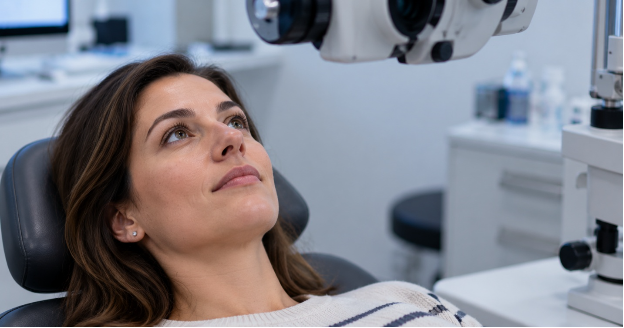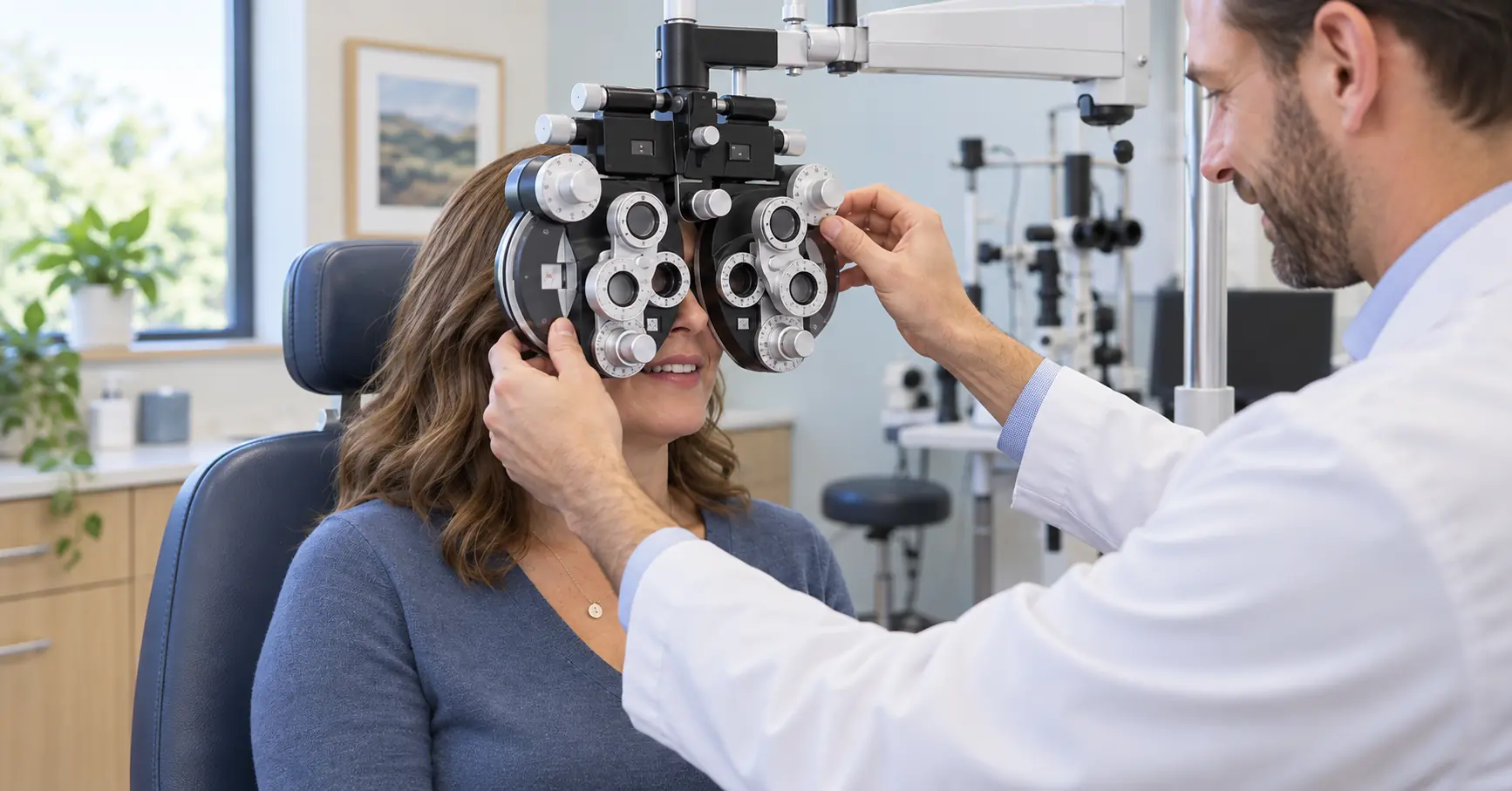
Block out for an hour and you'll rarely be caught out. A routine comprehensive exam usually runs 30 to 60 minutes. Add contact lenses, dilation, or a first visit, and you're closer to 90. Here's the breakdown so you can plan properly rather than guessing. The exam isn't one test. It's a sequence, and each part is quick, which is why the total surprises people. History and symptoms first, then visual acuity the chart everyone pictures. Refraction after that, where you compare lenses and tell us which looks clearer. That's the part that produces your prescription and it takes around ten minutes on its own. Then the health side. Eye pressure measurement for glaucoma screening. A slit lamp examination of the front of the eye at high magnification. An assessment of how the two eyes work together. A look at the retina and optic nerve, with or without dilation. Color vision and peripheral field testing where appropriate. Every one of those takes two to five minutes. Stack them and you're at half an hour before anyone has discussed results with you. Longer, and the time doesn't end when you leave. Dilating drops need around 20 to 30 minutes to take full effect before we can examine anything, and longer for some people. So a 40-minute exam becomes 70 minutes with a wait in the middle. The part people underestimate is afterwards. Pupils can stay dilated for up to six hours. You'll be light-sensitive, near vision will be blurry, and screens become difficult. Plenty of people manage to drive home, though it isn't comfortable and it isn't advisable in bright conditions. If you're being dilated, plan for it. Bring sunglasses. Arrange a lift if you can. And don't schedule it for the morning of a day you need to read anything. This is worth knowing before you book anywhere. Wide-field retinal imaging photographs most of the retina without drops. We use Optomap at both offices, which captures the image in a fraction of a second and gives us a permanent record to compare against at your next visit something a dilated look through a lens can't do. It doesn't replace dilation in every case. Certain findings, certain symptoms, and some high-risk patients still need drops for a full view. But for a lot of routine exams, it means no waiting period, no blurry afternoon, and you drive yourself home. If your time is tight, ask about it when you book. Here's the practical failure I see most often. Someone books a 45-minute appointment in their lunch break. The exam finishes on time. Then they need to choose frames, get measurements taken, discuss lens options, and sort out insurance and that's another 30 to 45 minutes they hadn't allowed for. So they rush it, pick something they're lukewarm about, and wear it for two years. If you're expecting a new prescription, treat the optical part as a separate appointment in your head even though it happens in the same visit. Give it its own half hour. And if you're being dilated, choose frames before the drops go in, because judging how something looks on your face is genuinely harder afterwards. Fill in any forms before you arrive. Most practices email them now and it saves ten minutes at the desk. Bring your current glasses and your contact lens boxes. The boxes matter more than people think they carry the exact parameters, which saves us reconstructing them. Bring a list of your medications. A surprising number affects the eyes. Know your family history, particularly glaucoma, macular degeneration and diabetes. If you don't know, ask before you come. Have your insurance details ready and mention them when booking so the benefit can be checked in advance. And say what you're there for when you make the appointment. "I want to try contacts" or "I've been getting headaches" changes how much time gets allocated. Turning up and mentioning it at the end is what causes appointments to overrun. You'll see very short appointment slots advertised. Worth understanding what they are. A 15-minute test is a refraction enough to produce a prescription and nothing more. It doesn't include pressure testing, a proper look at the retina, or an examination of the eye's health. That's fine if you're a young adult updating a stable prescription. It's inadequate if you're over 40, diabetic, have a family history of glaucoma, or have noticed anything changing. Glaucoma and diabetic retinopathy cause no symptoms until they're advanced, and they're found on the parts of the exam a quick refraction skips. The length of an appointment is usually a decent proxy for what's in it. Briefly, since it's the other thing people want to know when they're booking: without insurance, expect roughly $69 to $250 depending on the type of practice, with a national average around $110. With a vision plan, most people pay a small copay or nothing. Contact lens fittings are billed separately on top. There's a fuller breakdown of what drives the price, including what should be included and what gets added, in our guide to eye exam costs. Glasses generally take 7 to 10 business days, faster for simple single-vision lenses and longer for complex prescriptions or specialist coatings. Contact lenses usually arrive within about a week, though you'll often leave with trial lenses on the day, so you can start wearing them straight away. First-time contact lens wearers need a follow-up appointment a week or two later to check how the lenses are sitting. Budget for that when you're planning. Both offices are open seven days a week, which helps if weekday appointments are difficult. Tell us what you need when you call and we'll allocate the right amount of time a contact lens fitting in a routine slot is the main cause of anyone feeling rushed. Jersey City is on 201-420-7733. Florham Park on 973-994-1444. Around 45 to 60 minutes, sometimes longer with young children since testing has to be adapted to their attention span. Booking earlier in the day tends to go better. After an undilated exam, yes. After dilation, it's legal but uncomfortable, and bright daylight makes it harder. Bring sunglasses at minimum and arrange a lift if you can. No. It depends on your age, your prescription, your risk factors, and when you were last dilated. Wide-field retinal imaging covers many routine cases without drops. Every one to two years for most healthy adults, annually from 60, annually if you wear contact lenses, and annually if you have diabetes regardless of age. That was almost certainly a refraction rather than a comprehensive exam. Useful for a prescription, not sufficient for eye health. So, how long does it take for an eye test? Half an hour at the quick end, an hour and a half with dilation and contact lens fitting. Allow an hour as your default, add half an hour if you're choosing frames, and tell the practice what you need when you book. That's most of it.What's happening in that time
How long does an eye test take with dilation?
You may not need dilation at all
The half hour nobody plans for
What makes it faster
Why a 15-minute eye test isn't a full exam
How much is an eye checkup?
How long until you get glasses or lenses?
Booking with us
FAQ
How long do eye exams take for children?
Can I drive after an eye test?
Do I need dilation every time?
How often should I have an eye test?
Why did my last eye test take only ten minutes?
Allow an hour
Something's gone wrong with your eyes and you're standing in the kitchen trying to work out whether this is an emergency room situation or a...
Yes. Awake, aware, and looking at a small light the whole time. That's the answer people don't want, and it's the reason this gets searched ...
Struggling with dry eye? Schedule a dry eye evaluation and find out if OptiLight is right for you.
Book Appointment
Where to Go for Emergency Eye Care

Eye Tracking Problems: What They Are, and What They Aren't

Can Urgent Care Treat Pink Eye? What They Can and Can't Do