IPL Dry Eye Treatment Cost Budget $1,600 to $2,500 for a first course, and assume your insurance won't pay for it. That's the honest headline. Below is where the number comes from, what changes it, and the part most pages on this topic skip who shouldn't spend the money at all. Individual sessions run $400 to $800 across most practices, with $400 to $600 being the common band. A standard course is four sessions, spaced two to four weeks apart. That puts a full course at $1,600 to $3,200, and most practices land somewhere between $1,600 and $2,500. After that, maintenance. Most people need one session every six to twelve months to hold the improvement, at the same per-session price. So the realistic first-year figure is $1,600 to $2,500, with roughly $400 to $800 annually thereafter. Be careful comparing practices on the per-session number alone. A practice quoting $400 a session and recommending six sessions costs more than one quoting $600 and recommending four. Ask what the total course is, not what one session costs. Ask what's included, too. The dry eye workup that establishes whether you're a candidate gland expression, tear film measurement, meibography where available is sometimes bundled and sometimes billed separately. So is the follow-up assessment afterwards. And ask whether gland expression is performed after each IPL session. Many protocols combine the two, because the light softens the meibum and expressing it immediately afterwards clears the glands more effectively. If one practice includes that and another doesn't, you're not comparing the same treatment. Usually not, and you should plan on that. Most carriers, including Medicare, classify IPL for dry eye as elective rather than medically necessary. That holds even though the treatment is FDA-approved for dry eye management and even though you have a documented medical diagnosis. Some practices advertise that coverage is available with a documented MGD diagnosis and pre-authorisation. It does occasionally happen. It is not the norm, and I wouldn't start a course assuming it. Two things worth knowing if you want to try. It would be billed to medical insurance rather than vision insurance, since it's treating a medical condition. And any chance of approval depends on documented findings gland expression results, meibography images, tear break-up times plus evidence that conventional treatment has already been tried and hasn't worked. Call your carrier and ask directly before your first session, not after. FSA and HSA funds. This is the big one. IPL qualifies as a medical expense for both, and paying with pre-tax dollars is effectively a 25% to 35% discount. If your plan year resets in January, electing enough FSA to cover a course and starting treatment early in the year is the most efficient way to do this. Package pricing. Most practices discount a course paid upfront rather than session by session. Discounts of around 10% are common. Financing. CareCredit and similar medical credit programmes cover it, frequently with a deferred-interest period. Ask about maintenance pricing before you start. Some practices charge a reduced rate for maintenance sessions for existing patients. It's a fair question and it changes the lifetime cost. Four is the standard starting course, two to four weeks apart. Some people notice a difference after the first or second. Most report meaningful change around the third or fourth, and judging the treatment before you've completed the course isn't really possible. More severe cases sometimes need six to eight. Your practitioner should tell you this at the assessment rather than after session four. Then maintenance, typically one session every six to twelve months. How often depends on how much gland function you started with someone with significant gland dropout needs topping up more frequently than someone caught early. The sessions themselves take 15 to 30 minutes and you go straight back to your day afterwards. Here's what the cost pages selling IPL don't tell you. It treats one type of dry eye. IPL works on evaporative dry eye caused by meibomian gland dysfunction. If your dry eye is aqueous-deficient your lacrimal gland underproducing rather than your tears evaporating IPL is the wrong tool and you'll have spent two thousand dollars for very little. A proper assessment distinguishes these, and roughly 40% of people have elements of both. It doesn't regrow glands. If your glands have already atrophied significantly, IPL improves what's left. It doesn't restore what's gone. That changes what you should expect and it's worth knowing before you commit. Skin type matters. IPL is light-based and melanin absorbs light, so suitability depends on your skin tone and is assessed beforehand. This isn't a reason for anyone to assume they're excluded, but it is a reason to ask at your consultation rather than after booking a course. Some people need something else first. Active rosacea, Demodex overgrowth, or significant blepharitis may need addressing alongside or before IPL to get value from it. Worth doing this arithmetic honestly. Preservative-free artificial tears at three or four times a day cost roughly $300 to $500 a year, indefinitely, and they relieve symptoms for twenty minutes at a time without changing anything underneath. Prescription anti-inflammatory drops run considerably more, often with a copay every month. Neither improves gland function. IPL aims at the mechanism rather than the sensation, which is the argument for it and if it works for you, the maintenance cost is lower than ongoing prescription drops. If it doesn't work for you, you've spent the money. That's the honest trade, and it's why the assessment beforehand matters more than the price comparison. We offer OptiLight at both locations. Pricing depends on the number of sessions your assessment indicates, so call and we'll quote you the full course rather than a per-session figure you'd have to multiply yourself. The dry eye assessment comes first regardless. That's what tells us whether IPL is the right treatment for your type of dry eye, and we'd rather tell you it isn't than take your money. Jersey City is on 201-420-7733. Florham Park on 973-994-1444. Typically $400 to $800 depending on the practice and region, with a four-session course being standard. Ask for the course price rather than the session price when comparing. Most people describe a warm snapping sensation against the skin, similar to a light elastic band. Sessions are short and no anesthetic is needed. Improvement typically holds for six to twelve months before a maintenance session, though this varies with how much gland function you have to begin with. Makeup is removed for the session. Retinoids and recent sun exposure both affect suitability, so mention them at your assessment. They do different jobs and work well together. Compresses soften the oil temporarily. IPL targets the inflammation and gland function underneath. Most protocols continue home treatment alongside. The single most useful thing you can do about IPL dry eye treatment cost is find out whether you're the right candidate before you shop on price. Someone with clear meibomian gland dysfunction and reasonable gland reserve is likely to get real value from a course. Someone with aqueous-deficient dry eye is likely to be disappointed, however competitive the pricing was. The assessment costs a fraction of the treatment and it's the step that decides whether the rest is worth doing.What a course actually costs
Why per-session pricing is misleading
Is IPL covered by insurance?
How to genuinely reduce what you pay
How many IPL sessions will you need?
Who shouldn't pay for this
What you're comparing it against
What it costs at our offices
FAQ
What is Opti Light cost per session?
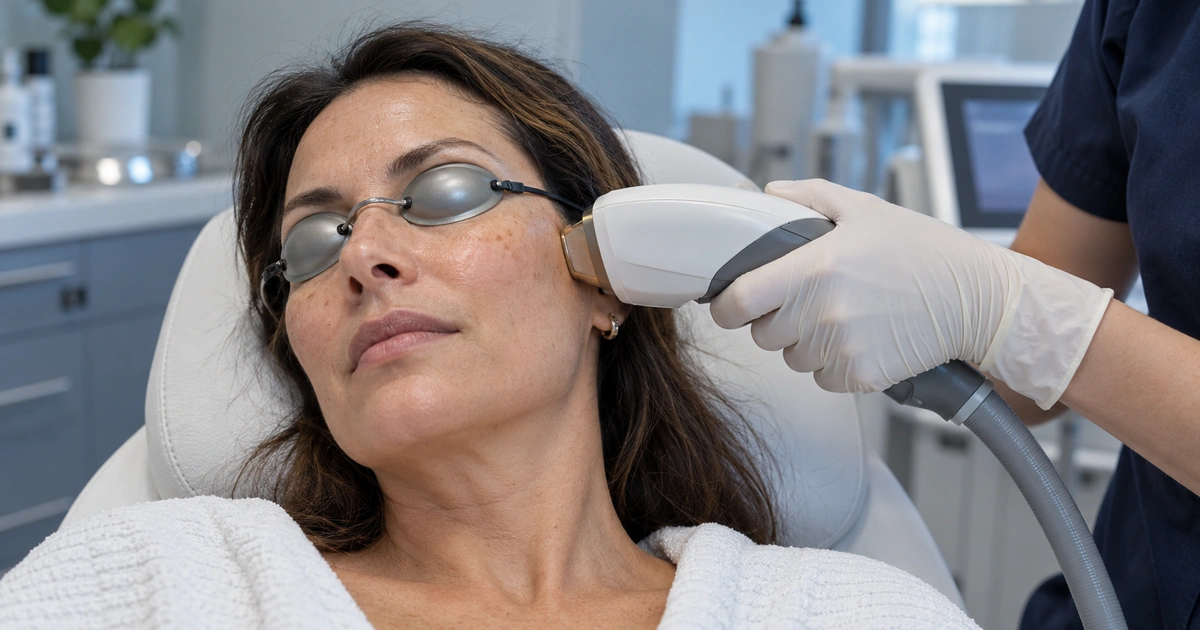
Does IPL hurt?
How long do the results last?
Can I wear makeup or use retinol around treatment?
Is IPL better than warm compresses?
Start with the assessment, not the price list
There isn't one. That sounds unhelpful, so let me explain why it matters. Dry eye comes in two broad types and they need different drops. Us...
You've probably been told to do this. There's a reasonable chance you've been doing it in a way that achieves nothing. The advice is usually...
Struggling with dry eye? Schedule a dry eye evaluation and find out if OptiLight is right for you.
Book AppointmentIPL Dry Eye Treatment Cost in NJ: What to Expect in 2026