Y.S

Mostly just time passing. There's a lens sitting behind your pupil, and it's clear for one reason. The proteins making it up are stacked in a very particular order. Disturb that order and it stops being clear. Which is exactly what decades of sunlight, oxidation and everyday metabolic wear slowly get around to doing. Proteins clump. The lens yellows. Light scatters instead of passing straight through, and the world softens at the edges. Live long enough and this happens to you. What differs between people is the speed, and a handful of things push it along. Age is the big one and the one you're stuck with. Most people show early changes in their forties. It becomes measurable by the sixties. Somewhere in the seventies it starts to interfere with driving at night and reading in poor light. Ultraviolet light is the interesting one, because it's the risk you can actually do something about. UVB damages lens proteins directly, and the damage accumulates. Cataracts turn up earlier in sunnier parts of the world and earlier in people who've spent their working lives outside. Smoking roughly doubles it in heavy smokers. Same oxidative mechanism it causes everywhere else in the body. Quitting helps — the risk drops rather than staying locked in. Diabetes raises the risk substantially and drags the age down with it. The chemistry is worth knowing: excess glucose in the fluid around the lens gets converted into sorbitol, the lens has no way of clearing sorbitol out, and the resulting osmotic stress clouds things faster. Steroids. This one catches people completely off guard, because nobody expects arthritis or asthma medication to affect their eyes. Long courses, especially oral, produce a distinctive cataract that can arrive in months. Trauma counts too, and not just recent trauma. A blunt injury from years back can surface as a cataract long afterwards. Previous surgery inside the eye does something similar. Heavy drinking is consistently linked to earlier cataracts. And genetics matter more than people assume if both your parents had surgery in their sixties, that's a reasonable guess for you. A cataract at thirty-five isn't ageing. There's usually a reason, and it's usually findable. Steroids top the list in my experience. Posterior subcapsular cataracts form on the back face of the lens, they develop fast, and they punch well above their size a small one wrecks night driving and makes reading miserable. Diabetes comes next, particularly type 1 diagnosed in childhood, or any diabetes that's run uncontrolled for a stretch of years. Then injury. Squash ball, airbag, a workshop accident where nobody was wearing safety glasses. The tricky part is the delay traumatic cataracts sometimes show up years later, by which point nobody connects the two. Less common but worth knowing about: severe eczema, radiotherapy to the head or neck, uveitis, strong myopia, and a handful of inherited metabolic conditions. Babies can be born with cataracts too, from infections during pregnancy or genetic causes, which is one reason newborn eye checks exist at all. If you're young and you've got one, the treatment question is only half of it. Finding out what caused it matters just as much, because whatever did may need attention itself. They behave differently enough that the label tells you something. Nuclear cataracts sit in the middle of the lens and creep along over years, yellowing as they go. The classic ageing type. Odd quirk: while developing, they can temporarily improve near vision, so people find themselves reading without glasses again for a while. It doesn't last. Cortical ones start at the rim as wedge-shaped opacities and work inwards like spokes on a wheel. Glare is the main complaint, and haloes around oncoming headlights, more than general blur. Commoner in diabetes. Posterior subcapsular cataracts sit right at the back, directly in the light path. Small ones cause outsized trouble. This is the steroid and diabetes type, and it's the one that shows up in younger patients. Less than the supplements aisle would suggest. Sunglasses do work, provided the UV400 rating is genuine. Cheap ones are fine if the rating is real. Add a hat with a brim and you've done most of what's available to you, and doing it from your twenties matters more than doing it from your sixties. Stopping smoking works. Controlling blood sugar works. If you're on long-term steroids, have a conversation with whoever prescribes them about whether the dose is the lowest that does the job never stopping on your own and get your eyes checked while you're taking them. Eye vitamins don't prevent cataracts. AREDS formulas have solid evidence behind them for macular degeneration and none at all for this. People ask this a lot and deserve a straight answer rather than a pat on the head. Permanent sight loss from cataract surgery is genuinely rare. Serious complications together infection, retinal detachment, lasting macular swelling come in under 1%. Rare isn't never though, and there are four separate things hiding inside this question. Posterior capsule opacification is far and away the most common reason vision clouds over again afterwards. Somewhere between a fifth and a third of people get it within two to five years. The membrane holding the lens implant hazes over, and it feels so much like the cataract returning that people assume the surgery failed. It's neither blindness nor really a complication. A YAG laser clears it in the office in a couple of minutes, no anaesthetic needed, vision back straight away. And it doesn't come back a second time. Endophthalmitis is the one that genuinely threatens sight. Infection inside the eye. It's also very uncommon a UK database covering more than 1.3 million procedures put it at 0.02%, and modern reported rates generally sit between 0.02% and 0.08%. Risk goes up with capsule rupture during surgery, with uveitis, diabetes and glaucoma. Signs appear within days: pain getting worse, redness, vision dropping. That's a phone call the same hour, not a wait for your follow-up. Cystoid macular oedema is fluid gathering in the central retina. It's the most frequent complication of surgery that otherwise went perfectly, usually peaking six to ten weeks out. Central vision blurs. Most cases are mild and clear up with drops. And then the one almost nobody explains. Sometimes vision doesn't improve because something else was already wrong. A dense cataract blocks the surgeon's view of your retina exactly as it blocks yours. Macular degeneration, diabetic retinopathy, glaucoma damage any of it can be sitting there quietly, with the cataract masking how much sight has already gone. Take the lens out and you find the real ceiling. That's not a failed operation. It is a horrible surprise though, and an avoidable one. Look at the retina properly beforehand and you know what to expect rather than discovering it in the recovery room. We don't do the surgery. Everything around it, we do. Spotting cataracts early. Tracking how fast they're moving. Telling you honestly when operating is worth it rather than merely possible because most cataracts sit there for years after they first become visible, and there's no prize for rushing. And the retinal assessment, which matters most in exactly the scenario above. Optomap imaging lets us photograph the retina and see what's behind the cataract before anyone removes it. When the time comes we'll refer you, then look after you afterwards. Jersey City is on 201-420-7733. Florham Park on 973-994-1444. No. Once those proteins have clumped there's no unclamping them. Drops sold for dissolving cataracts don't work. Stronger glasses and brighter lighting genuinely help early on, and after that surgery is the only real option. Age-related ones, over years. Steroid and diabetic ones can move in months, which is why younger patients get monitored more often rather than less. Eventually, yes, in the sense that a fully opaque lens blocks everything. Where surgery is available that's now unusual. Worth knowing that waiting a very long time makes the operation technically harder, so delay isn't a free choice. The cataract itself can't the lens is gone. What happens is capsule opacification, which feels similar and takes a short laser procedure to fix. No. Screens dry your eyes out and tire them. They don't emit meaningful UV and they don't touch the lens. So what causes cataracts? Ageing, mostly, hurried along by sunlight, smoking, diabetes and steroids. Nearly everyone gets them and nearly everyone does fine. What's worth doing early isn't treatment. It's measurement when yours appeared, how quickly they're shifting, and what condition the retina behind them is in. Have that on record and the decision makes itself when it finally arrives.What causes cataracts in your eyes
What causes cataracts in young people
Three types, and why it matters which
What lowers your risk
What causes blindness after cataract surgery
Where we fit in
FAQ
Can cataracts be reversed without surgery?
How fast do cataracts progress?
Do cataracts cause blindness if left untreated?
Can cataracts come back after surgery?
Does screen use cause cataracts?
Get a baseline while it's early

Y.S
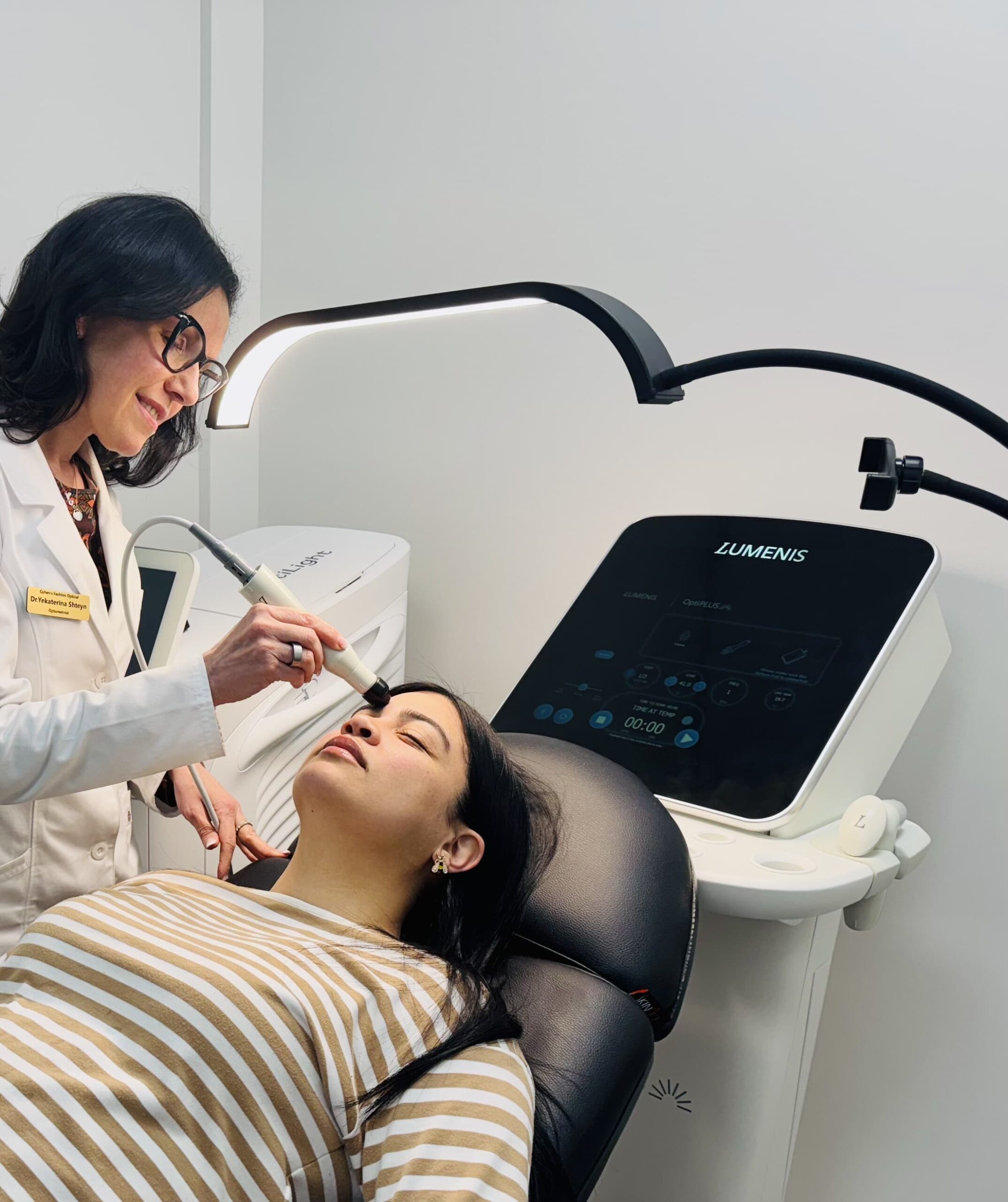
Struggling with dry eye? Schedule a dry eye evaluation and find out if OptiLight is right for you.
Book Appointment
Eye Exercises for Double Vision: What Helps and What Doesn't
How to Care for Heterochromia Eyes. Know when to get them Checked