
Myopia used to be treated as a shopping problem. You couldn't see the board, you got glasses, done. That's changed, and not because anyone got fussier. It changed because we now understand that a nearsighted eye isn't just an eye that needs a prescription. It's an eye that's grown too long, and the length itself carries risk decades later. Which means what you do about it at eight matters far more than what you do about it at thirty. Two things, and they interact. Genetics sets the stage. One nearsighted parent roughly doubles a child's odds. Two roughly quadruples them. But genes alone can't explain what's happened in the last forty years, populations don't change that fast. The other half is environmental. Children who spend more of their childhood focused up close and less of it outdoors develop myopia more often and progress faster once they have it. Screens get most of the blame in the press, though the research points at near work generally rather than screens specifically. A book held six inches from your face does much the same thing as a tablet. What happens: the eyeball elongates. Light that should focus on the retina lands short of it, and distance blurs. Once that length is there, it stays. No. And I'd rather say that plainly than dress it up. An eye that has lengthened doesn't shorten again. There's no exercise, no supplement, no lens that reverses axial elongation. Anything promising to cure or reverse nearsightedness is selling you something, and usually something harmless but useless. What you can do is slow it down while it's still happening. That distinction matters more than it sounds. A child heading for -6.00 who ends up at -3.00 instead has meaningfully lower odds of retinal detachment, glaucoma and macular disease in their sixties. You haven't reversed anything. You've changed the endpoint. And for adults, surgery corrects the blur without shortening the eye — worth knowing if you're expecting LASIK to undo the condition rather than compensate for it. If your eyes have stopped changing, this part is simple. Glasses or contacts, an accurate prescription, and an eye exam every year. The annual exam isn't a formality here. Myopic eyes carry elevated lifetime risk of glaucoma, cataract, retinal tears and myopic macular degeneration, and all of those are silent early on. Someone with a -5.00 prescription needs their peripheral retina looked at properly, not just their acuity measured. Laser correction is an option for stable prescriptions. It won't change the risks above, which is exactly why people who've had it still need checking annually. This is where eye care for myopia has genuinely changed, and where most parents haven't caught up yet. Standard single-vision glasses correct the blur and do nothing to slow the eye down. Four approaches do, and all four have real trial data behind them. Low-dose atropine drops. Diluted to 0.01% to 0.05%, applied nightly. Reduces progression by somewhere between 30% and 60% depending on concentration. No lens to keep track of, which suits younger children. Dual-focus soft contact lenses. MiSight is the FDA-approved one, showing roughly a 59% reduction in progression over three years and holding that benefit out to six years. Daily disposables, so there is nothing to clean. Myopia control spectacle lenses. DIMS and HALT designs the ones with the ring of tiny lenslets around a clear center slow axial elongation by around 30% to 50%. Glasses the child was going to wear anyway. Orthokeratology. Rigid lenses worn overnight reshape the cornea temporarily, so no correction is needed during the day. Roughly 35% to 45% reduction. Worth knowing that ortho-k carries a higher risk of microbial keratitis in children than the other options, which is a real conversation rather than a footnote. Combinations are increasingly common too. Adding low-dose atropine to a lens-based treatment does better than on its own for children who keep progressing. None of them stop growth completely. That isn't the goal. Worth saying, because these come up constantly and the internet is generous about them. Eye exercises don't slow myopia. The 20-20-20 rule is fine advice for screen fatigue and does nothing to axial length. Pencil push-ups treat convergence problems, which are a different thing entirely. Vitamins and diet don't slow it either. Eat well for general health. It won't change your child's prescription. Under-correcting deliberately giving a child weaker glasses than they need was tried, and the studies found it made progression slightly worse rather than better. And no, taking the glasses off doesn't help the eyes "work harder." That one's persistent and it isn't true. Between forty and eighty minutes a day of outdoor time reduces the chance a child develops myopia in the first place. The effect on children who are already myopic is more modest, but the preventive signal is consistent across studies. The mechanism seems to be light intensity rather than the activity. Outdoor light is orders of magnitude brighter than indoor lighting even on a grey day, and that brightness appears to influence how the eye regulates its own growth. Practically: it doesn't matter what they do out there. Walking to school counts. A few questions that separate a practice doing this properly from one selling a product. Do they measure axial length, or only refraction? Axial length is the thing being treated. Tracking it shows whether the treatment is working long before the prescription changes. Do they offer more than one option? A practice that fits every child with the same lens isn't personalizing anything. Will they tell you the numbers honestly including that no treatment stops progression entirely? And do they explain what happens if it isn't working? Progressing in treatment is common enough that the plan should already account for it. At our offices we assess whether a child is a candidate, discuss which approach suits them, and monitor the response over time. If your child's prescription has moved in the last year, that's the conversation to have now rather than at their next routine visit. Jersey City is on 201-420-7733. Florham Park on 973-994-1444. Usually, the late teens to early twenties, though it varies. Earlier onset generally means more progression overall, which is why a myopic seven-year-old is more urgent than a myopic fourteen-year-old. Near work is associated with it, and screens are near work. The stronger and better-evidenced factor is what the screen replaces — time outdoors. Adding outdoor time appears to matter more than subtracting screen time. Often not, or only partly, since many plans treat it as elective. Check your specific benefit, and ask about FSA and HSA eligibility, which frequently applies. Possibly not, and that's worth measuring rather than assuming. Slow progressors sometimes need only monitoring. Rate of change matters more than the number itself. Good eye care for myopia begins with knowing which direction things are moving. A single prescription is a snapshot. Two, a year apart, tell you something you can act on. If your child is nearsighted and nobody has discussed slowing it down with you, that's the conversation worth booking.What causes myopia
Is myopia reversible?
How to treat myopia in adults
How to treat myopia in children
What doesn't work
The one habit that does something
Choosing among eye care centers for childhood myopia treatment
FAQ
At what age does myopia stop progressing?
Can screen time cause myopia?
Is myopia control covered by insurance?
My child's prescription barely changed this year. Do we still need treatment?
Start with the measurement
Two questions sort this out most of the time. Does it hurt? And did it show up overnight or creep in over a fortnight? A stye hurts and arri...
If the worst moment of your day is the first thirty seconds of it lids stuck, eyes gritty, that scraping feeling as you blink the cause is u...
Struggling with dry eye? Schedule a dry eye evaluation and find out if OptiLight is right for you.
Book AppointmentEye Care for Myopia: What Works and What Doesn't
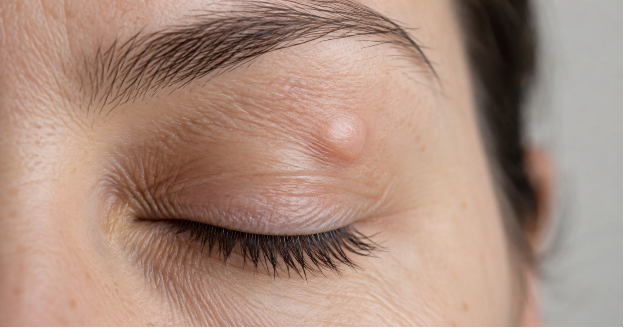
Chalazion vs Stye: How to Tell Which One You Have
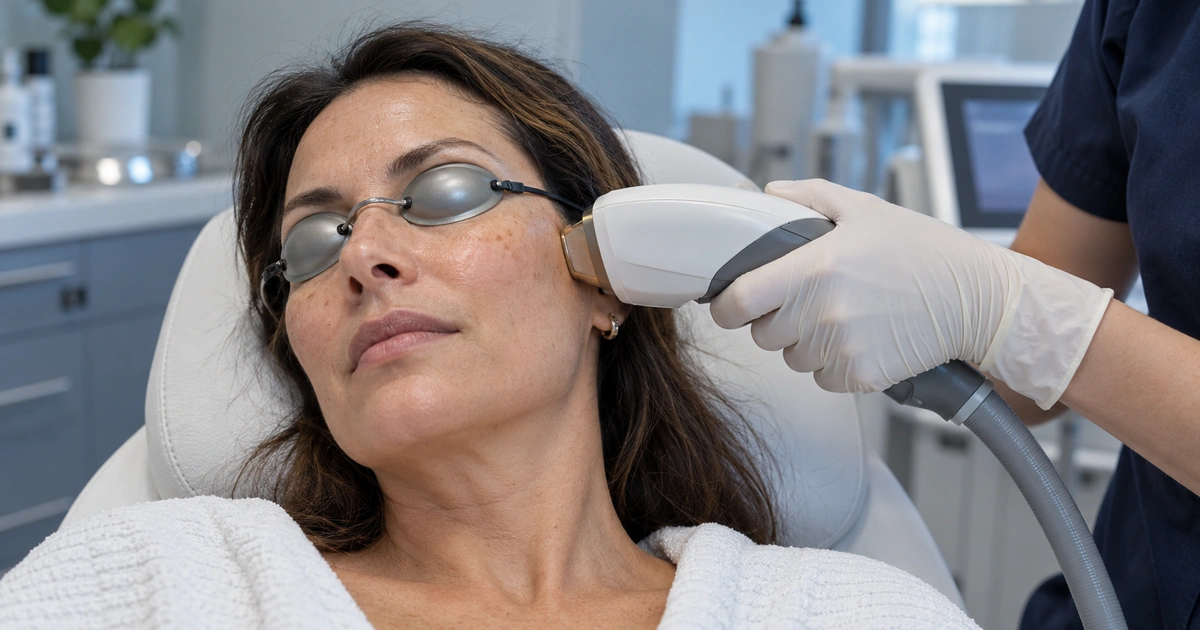
IPL Dry Eye Treatment Cost in NJ: What to Expect in 2026