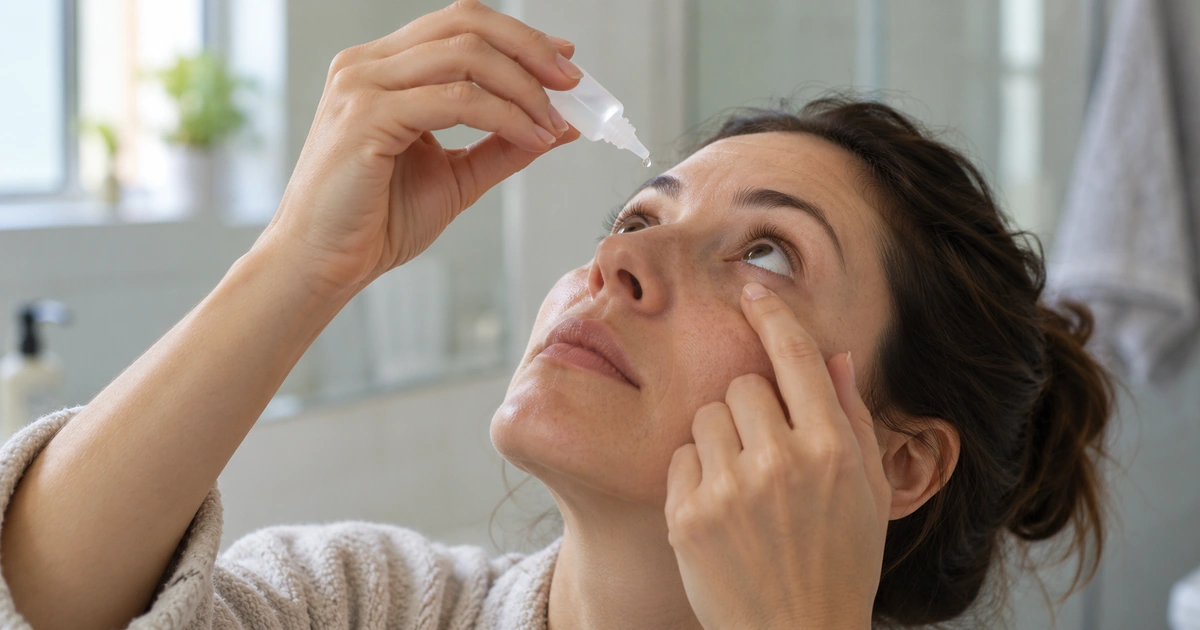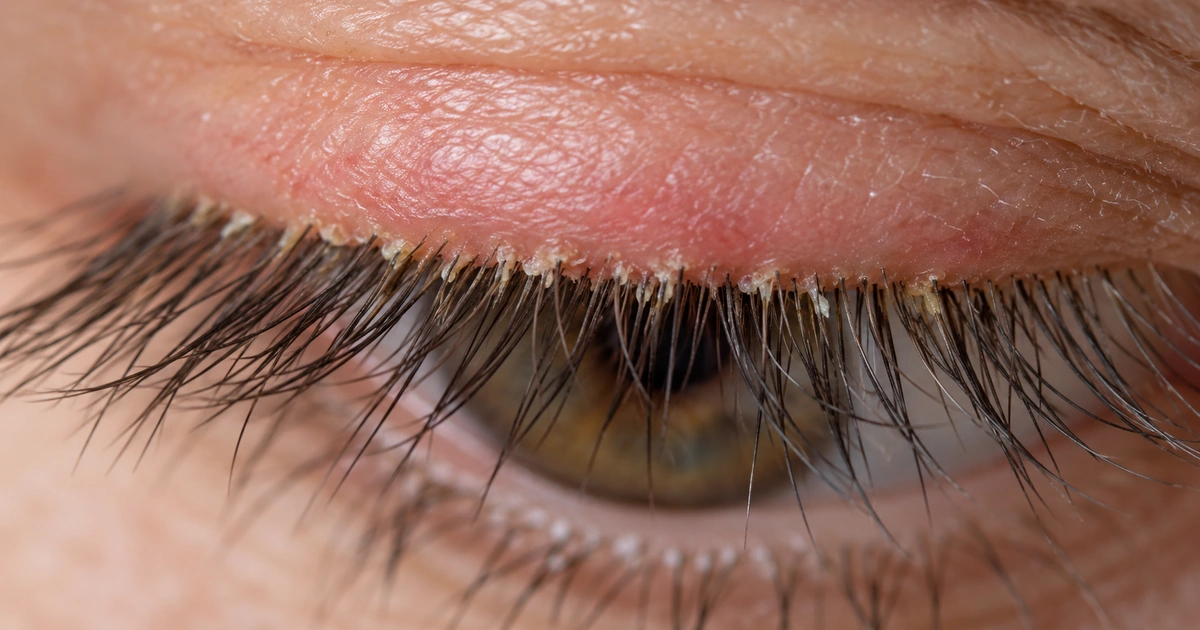
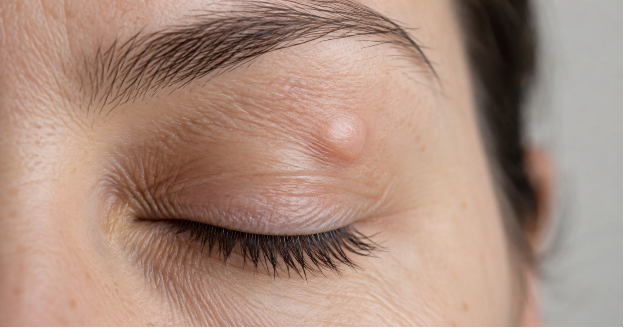
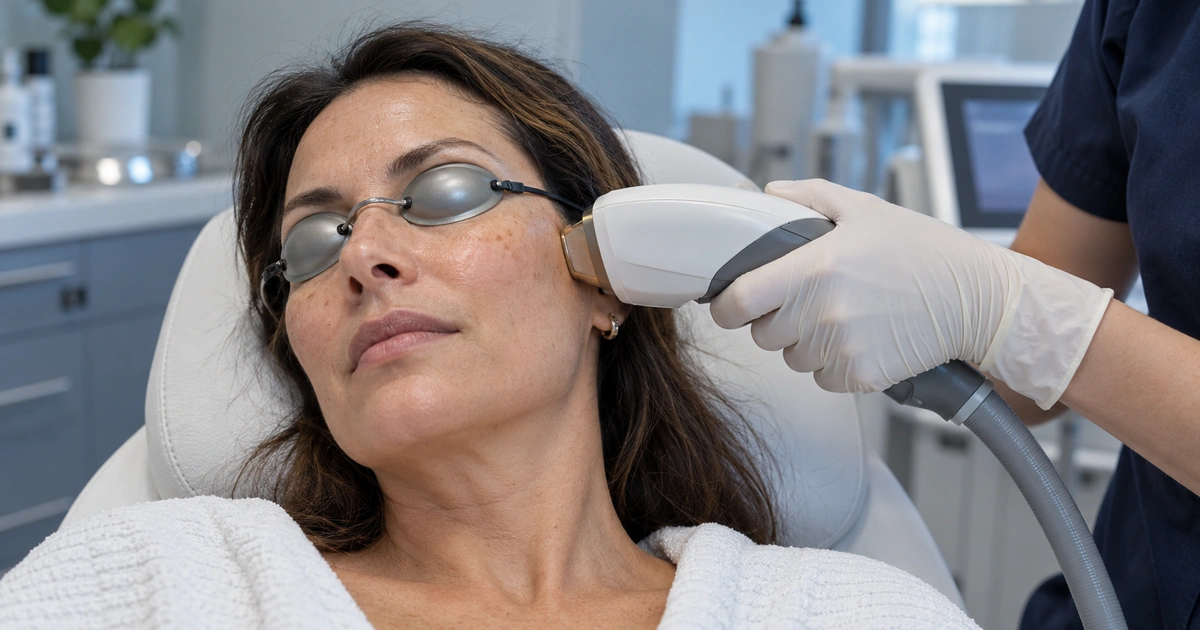
Two questions sort this out most of the time. Does it hurt? And did it show up overnight or creep in over a fortnight? A stye hurts and arrives fast. A chalazion usually doesn't hurt and takes its time. That's the short version, and for the majority of eyelid lumps it's enough. The longer version matters because the treatments differ, antibiotics help one and do nothing for the other, and a small number of lumps that look like either are neither. Worth clearing up, because it trips people up constantly. Hordeolum is simply the medical word for stye. They're the same thing. Anyone comparing "hordeolum vs chalazion vs stye" as three separate conditions is comparing two. Where it gets useful is that a hordeolum comes in two forms and knowing which you've got explains why some styes look completely different from others. An external hordeolum sits at the lash line. It involves the small glands right at the edge of the lid, it's superficial, and it usually centers on an individual eyelash. This is the classic stye visible, red, pointed, comes to a yellow head. An internal hordeolum involves a meibomian gland deeper inside the lid. You often can't see much from the outside. Flip the lid and there it is. These hurt more, take longer, and are the ones most likely to leave a chalazion behind afterwards. So, the real spectrum runs: external hordeolum, internal hordeolum, chalazion. Not three separate things so much as three points on the same eyelid. An infection, usually staph, in a gland or a lash follicle. Pus builds up, the gland swells, and it hurts because infected tissue does. You'll notice it fast. Most people go to bed fine and wake up with a sore, red bump at the lid edge. Blinking is uncomfortable. The eye may water. Bright light gets irritating. Left alone, most styes point, drain and settle within a week to ten days. Not an infection at all, which is the part people find hard to believe when they're looking at a lump on their eyelids. A meibomian gland blocks. The oil that should flow out builds up behind the blockage, leaks into the surrounding tissue, and the body walls it off with inflammatory cells. What you end up with is a firm nodule of granulomatous tissue a contained mess rather than an infection. That's why it's usually painless. Nothing is actively infected. It's also why antibiotics achieve nothing. Chalazia are typically under a centimetre, sit more often in the upper lid than the lower, and feel like a small pea you can move slightly under the skin. They can stay put for months. Very common, and it confuses people who think their stye "isn't healing." An internal hordeolum infects a meibomian gland. The immune system clears the bacteria. But the gland stays blocked, and the trapped oil behind it goes on provoking a reaction. So, the redness fades. The pain goes. And a firm painless lump remains, sometimes for months. That isn't a stye that failed to heal. It's a chalazion that used to be a stye, and it needs a different approach from that point on. Press it gently, clean hands. Sore to touch and sitting right on the lash line, red and warm, appeared in a day or two stye. Firm, painless, sitting up in the body of the lid rather than at the edge, arrived slowly, skin over it looks normal chalazion. Started as the first and turned into the second also common and treat it as a chalazion now. One caveat: an early chalazion can be mildly tender while it's still inflaming, so pain isn't quite absolute. Onset speed is the more reliable signal. Warm compresses, and done properly, which most people don't. Properly means a cloth or mask genuinely warm and held there for five to ten minutes, three or four times a day. A flannel that's gone cold after ninety seconds isn't doing anything. Microwaveable masks hold heat far better than a wet cloth. Keep the lid clean. Skip eye makeup entirely until it's gone and throw out anything you used in the days before it appeared. Leave contact lenses out. Don't squeeze it. Squeezing pushes infection deeper into the lid, and a stye that would have drained on its own can become cellulitis instead. Antibiotic ointment gets prescribed sometimes, though evidence for routine use in an uncomplicated stye is thin. It becomes appropriate when the infection is spreading rather than staying put. Same warm compresses, more of them, for much longer. The goal here is different. You're trying to soften hardened oil enough that the gland can clear itself, which takes weeks rather than days. Heat first, then gentle massage of the lid towards the lash line afterwards. Most people give up too early. Four weeks of consistent daily compresses is a fair trial. Two half-hearted days isn't. If it's still there after that, or it's large enough to be pressing on the eye, there are two office options. A steroid injection into the lesion, which shrinks a good proportion of them. Or incision and curettage, where the lid is numbed, everted, and the contents scooped out through the inner surface so there's no external scar. Neither is dramatic. Both beat living with it for a year. Here's what the other articles on this topic leave out. Sebaceous carcinoma is a cancer arising from the meibomian glands. It's uncommon, and it's notorious for imitating a chalazion so convincingly that the average delay to correct diagnosis runs one to three years. It typically shows up in people from their late fifties onwards. The pattern that should raise a flag: a chalazion that keeps coming back in the same spot. Or one that never resolves despite proper treatment. Or an eyelid that's inflamed on one side only and won't settle. Other things worth noticing lash loss over the lump, unusual pigmentation, a lesion that ulcerates. Standard guidance is that a recurrent chalazion should be biopsied to rule this out, and that excised chalazia in older patients warrant histopathology rather than being binned. I'm not raising this to alarm anyone. The overwhelming majority of eyelid lumps are exactly what they look like. But "it keeps coming back in the same place" is the one sentence that should always get you an examination rather than another packet of lid wipes. Some eyelid swelling isn't a lump at all. If the redness spreads onto the cheek or across the brow, if the whole lid swells shut, if there's fever, if the eye is pushed forward or hurts when you move it, or if your vision changes that's preseptal or orbital cellulitis territory and it's same-day. Orbital cellulitis in particular is an emergency. It's rare as a stye complication, and it's serious when it happens. Recurrent lumps are almost always a symptom of something ongoing rather than bad luck. Blepharitis is the usual culprit. Meibomian gland dysfunction, where the oil is too thick to flow properly, means glands block easily and repeatedly. Rosacea makes it worse. So does Demodex overgrowth along the lash line. If you've had three chalazia in two years, treating each one individually is missing the point. The glands are the problem. That's where lid hygiene as a permanent routine comes in, and where treatments aimed at gland function intense pulsed light, for instance, which we offer as OptiLight can change the pattern rather than the episode. We look at the lid under a slit lamp at high magnification, which shows things you can't see in a bathroom mirror. Whether the lesion sits in a gland or a follicle. Whether the surrounding glands are blocked. Whether there are collarettes at the lash bases pointing to Demodex. We evert the lid, because internal hordeola and some chalazia are only visible from the inside. And we check the cornea, since a lump pressing on the eye can distort the surface and blur vision, which usually resolves once the lump does. From there it's either a treatment plan you carry out at home, an in-office procedure, or for the small number of lesions that don't behave typically a referral for biopsy. Jersey City is on 201-420-7733. Florham Park on 973-994-1444. Yes. Hordeolum is the clinical term, stye is the everyday one. External hordeola sit at the lash line, internal ones sit deeper in the lid. Not in the way pink eye is. The bacteria involved live on most people's skin already. Still, don't share towels, pillowcases or eye makeup while you've got one. A week for a stye that isn't improving. Four weeks for a chalazion that's had proper daily compresses. Immediately for spreading redness, fever, or vision changes. And regardless of timing if a lump has come back in the same place before. Leave them out until it's resolved. Lenses aggravate an inflamed lid and, with an active infection, add risk you don't need. Many do, given weeks of consistent warm compresses. A stubborn one may need injection or minor surgery, and there's no benefit to waiting a year to find out. Temporarily. A large lump can press on the eye and induce astigmatism, which blurs things until the swelling reduces. Vision that doesn't recover afterwards needs checking. Most of the chalazion vs stye question sorts itself out with two observations — whether it hurts and how fast it arrived — and most eyelid lumps resolve with heat and patience. The ones worth an appointment are the stubborn ones, the spreading ones, and above all the ones that keep returning to the same spot.Stye vs chalazion at a glance
Stye (hordeolum)
Chalazion
Cause
Bacterial infection
Blocked oil gland, no infection
Onset
Overnight for two days
Gradual, over a week or more
Pain
Tender, sore to touch
Usually, painless
Position
At the lid margin, on a lash
Deeper in the lid, away from the edge
Feel
Soft, may come to a head
Firm, rubbery, moves under the skin
Redness
Red and warm
Skin often normal
Duration
Around 7 to 10 days
Weeks to months
Antibiotics
Sometimes
No
Stye vs chalazion vs hordeolum: the naming confusion
What a stye is
What a chalazion is
How one turns into the other
Telling them apart yourself
Treating a stye
Treating a chalazion
The one that isn't either
When it needs seeing urgently
Why they keep happening
What happens when you come in
FAQ
Is a hordeolum the same as a stye?
Are styes contagious?
How long should I wait before seeing someone?
Can I wear contact lenses with a stye or chalazion?
Will a chalazion go away on its own?
Can either affect my vision?
If in doubt, get it looked at
If the worst moment of your day is the first thirty seconds of it lids stuck, eyes gritty, that scraping feeling as you blink the cause is u...
Everyone reading this has mites living on their face. That's not a diagnosis, it's just biology, and by old age almost nobody is without the...
Struggling with dry eye? Schedule a dry eye evaluation and find out if OptiLight is right for you.
Book AppointmentChalazion vs Stye: How to Tell Which One You Have
IPL Dry Eye Treatment Cost in NJ: What to Expect in 2026